
Confession: I Read the Most Popular Book on Goodreads and Cried My Eyes Out

Exquisite

PureWow editors select every item that appears on this page, and some items may be gifted to us. Additionally, PureWow may earn compensation through affiliate links within the story. All prices are accurate upon date of publish. You can learn more about the affiliate process here.

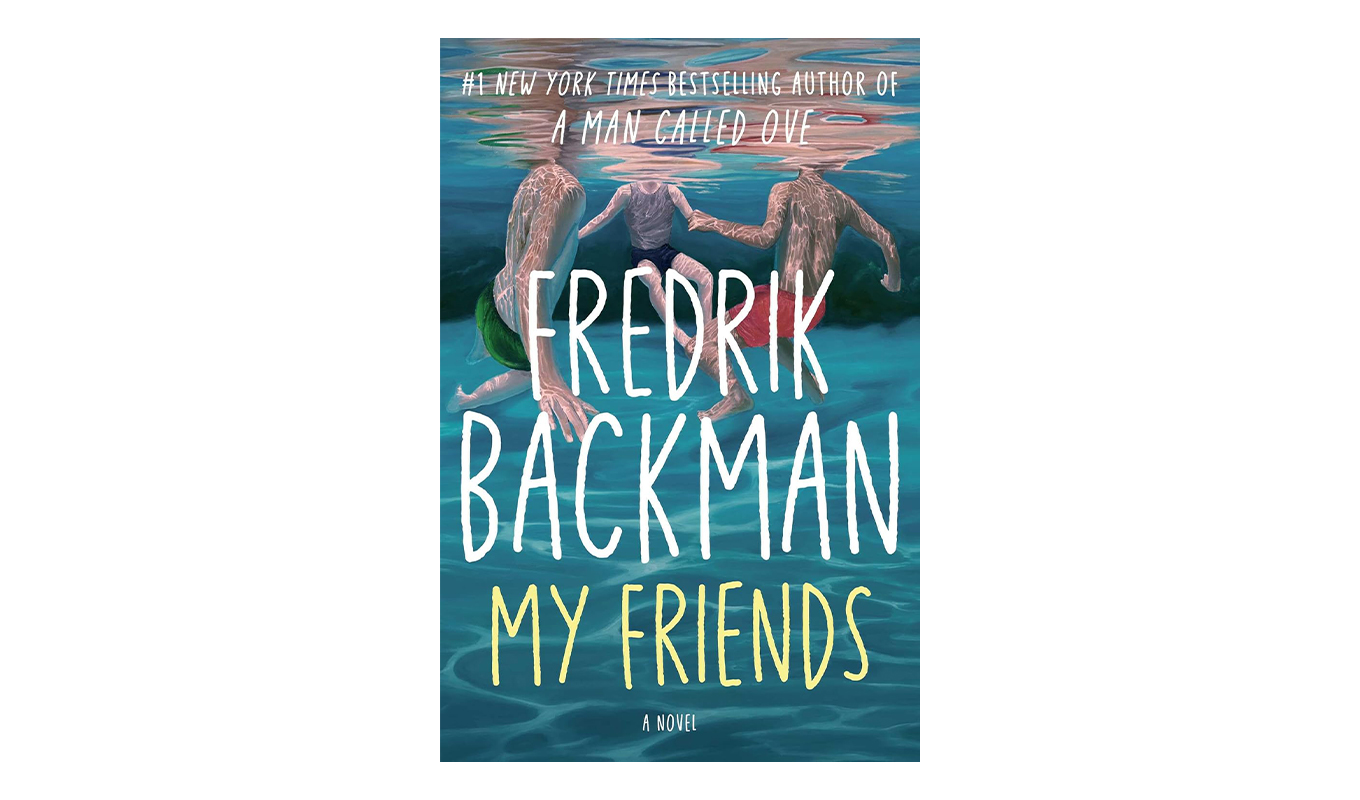
I hate crying. While I have friends who will generously weep at the end of a movie, I’m the one angrily repressing my tears and pretending to sneeze so I can wipe my eyes. But there was no hiding my emotions when I got my hands on the 2025 Goodreads’ Choice Awards winner in the fiction category. After turning the last page of Fredrik Backman’s My Friends, I had tears trailing down my cheeks—and I wasn’t mad about it.

The writer who gave us A Man Called Ove returns with a similar tale of an older curmudgeon (Ted) whose life is turned upside down by a bright young woman (Louisa). Louisa is an artist, ex-foster kid and orphan whose best friend, Fish, just died by suicide. Ted is the loyal friend of the most famous artist in the world, C.Jat. It’s C.Jat’s first painting, “The One of the Sea,” that Louisa kept as a postcard in her backpack as she bounced from home to home. On a fateful day—the day the painting will be auctioned for millions of dollars—their worlds collide. Suddenly, the budding young artist finds herself saddled with a valuable painting. And the curmudgeon in turn finds himself saddled with a persistent girl who needs to know the story of the painting so she can understand herself.

Atria Books

My Friends is brimming with so many themes I could write a dissertation. Art and friendship. Grief and death. Childhood, growing up. Family. What I loved about A Man Called Ove, and what Backman does again well, is the prose. He is funny without being deprecating, delivering a plethora of aphorisms about life, and, in this case, the power of art, without making it feel cliché or cringe. It seems nearly every page is brimming with some melancholic observation that is funny, only because I know it’s true. Example: “Little children think teenagers are the best humans, and teenagers think teenagers are the best humans, the only people who don’t think that teenagers are the best humans are adults. Which is obviously because adults are the worst kind of humans.”

I found Louisa to be a particularly interesting character. She quickly reminded me of Stevens from Kazuo Ishiguro’s Remains of the Day. Both read as protagonists who are possibly on the spectrum, and Backman and Ishiguro render them with compassion, humor, clarity and agency. Louisa’s internal monologue is resilient, but because she lacks a filter, it is comical—even to herself. 

What most cued all my tears was the way Backman, through each character, spoke of the power of art as a way to save a soul. Through the story of Ted, C.Jat and their childhood friends comes a scathing critique of the world’s attempt to industrialize the act of creation and taint it with money. It’s an ode to those who dare to create, no matter where they come from, no matter how unknown. Backman puts it this way: “Art doesn’t require training, dear child, art just needs friends.”


mw headshot

Editor, SEO and Audience Development

  • Writes across all verticals, including beauty, fashion, wellness, travel and entertainment, with a focus on SEO and evergreen content
  • Has previously worked at Popular Photography and Southern Living, with words in Martha Stewart and Forbes Vetted
  • Has a B.S. in journalism from Boston University