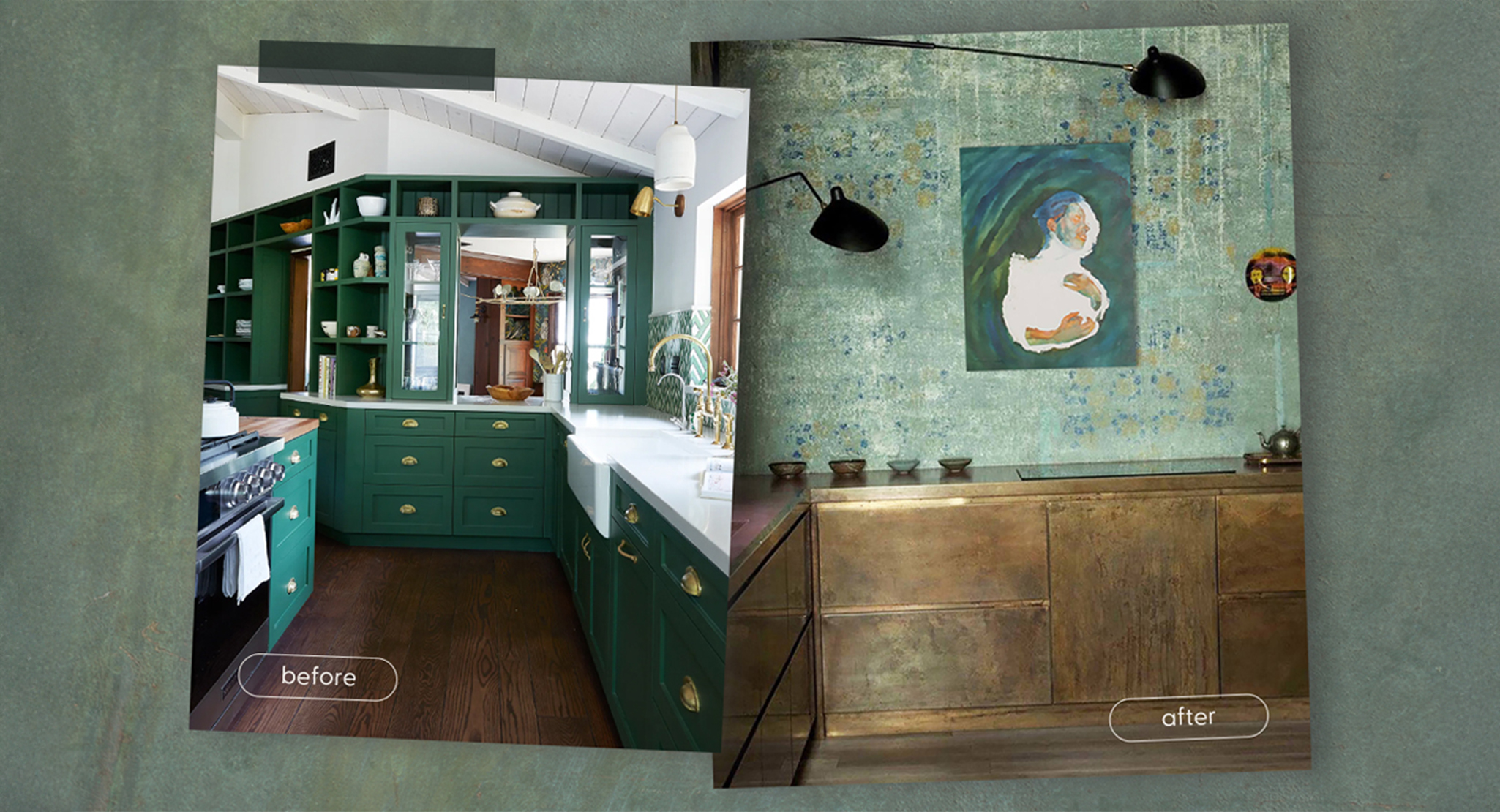
I still remember the moment I saw emerald hues taking over Instagram: glossy lacquered cabinets, deep velvet sofas, pigmented tile that looked imported from Morocco. It was the unofficial color of 2020 escapism—glamorous, bold and invigorating in a moment when everything else felt flat. The hue topped 1stDibs’ annual designer survey for three consecutive years (2020–2023) as the most-used color in interiors—and paint brands rushed to meet the moment. Suddenly, we were flooded by a frenzy of dramatic jewel-toned greens.
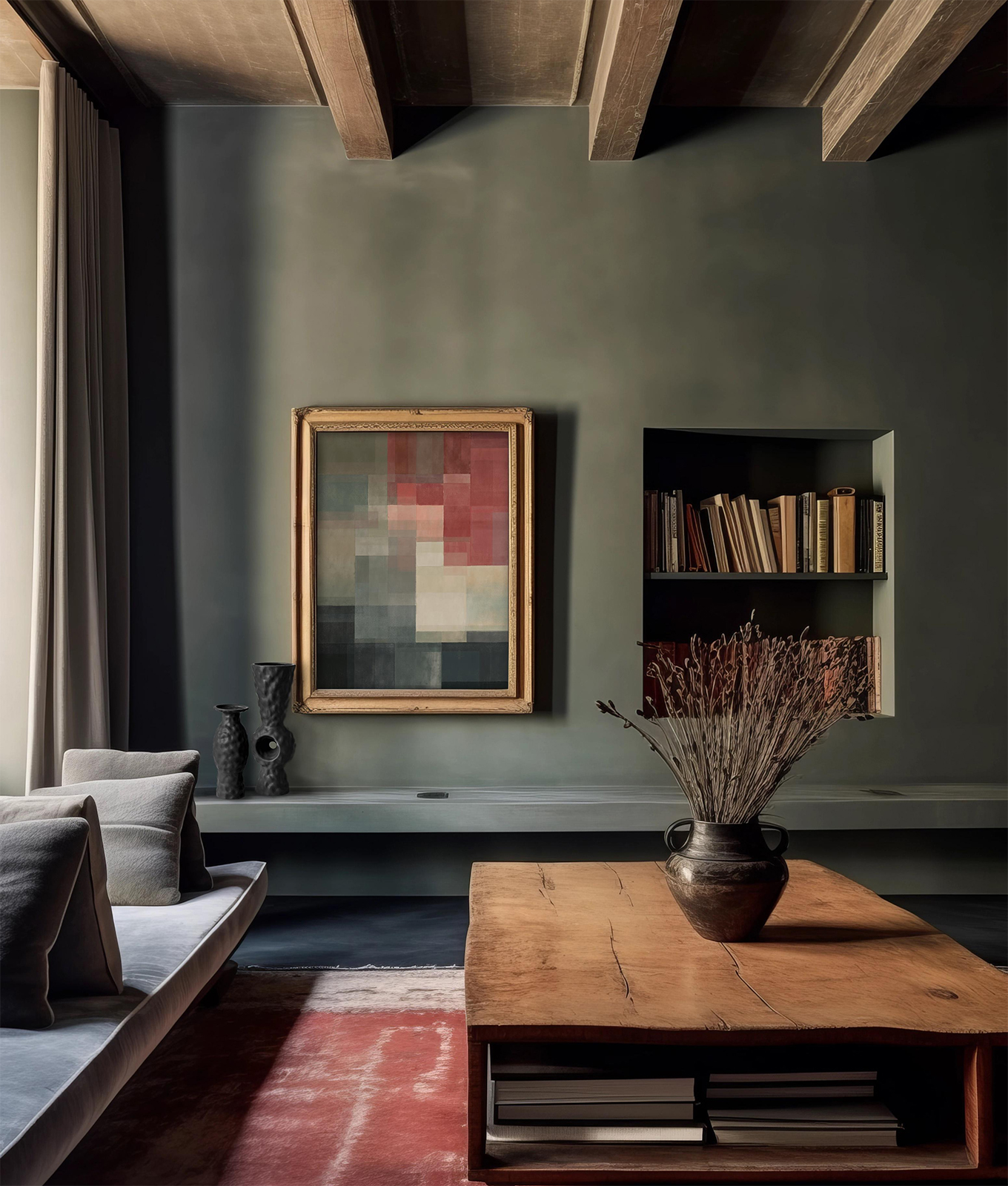
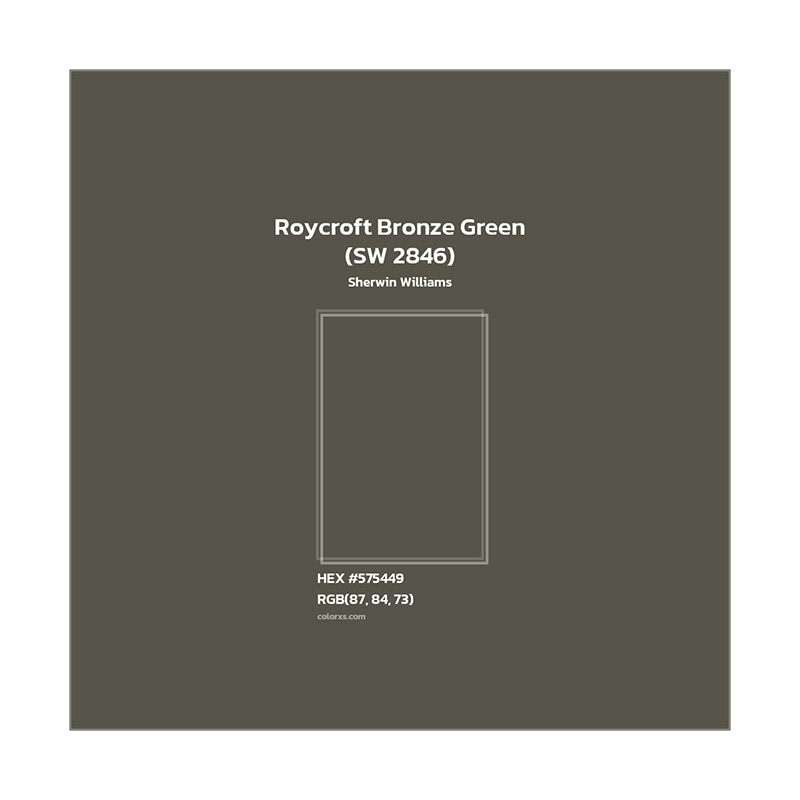
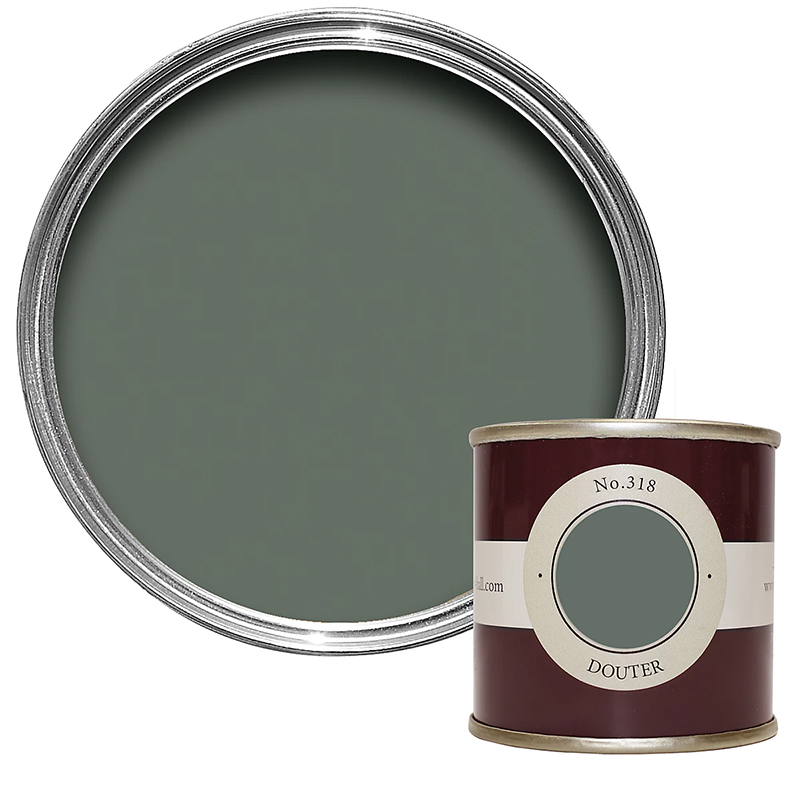
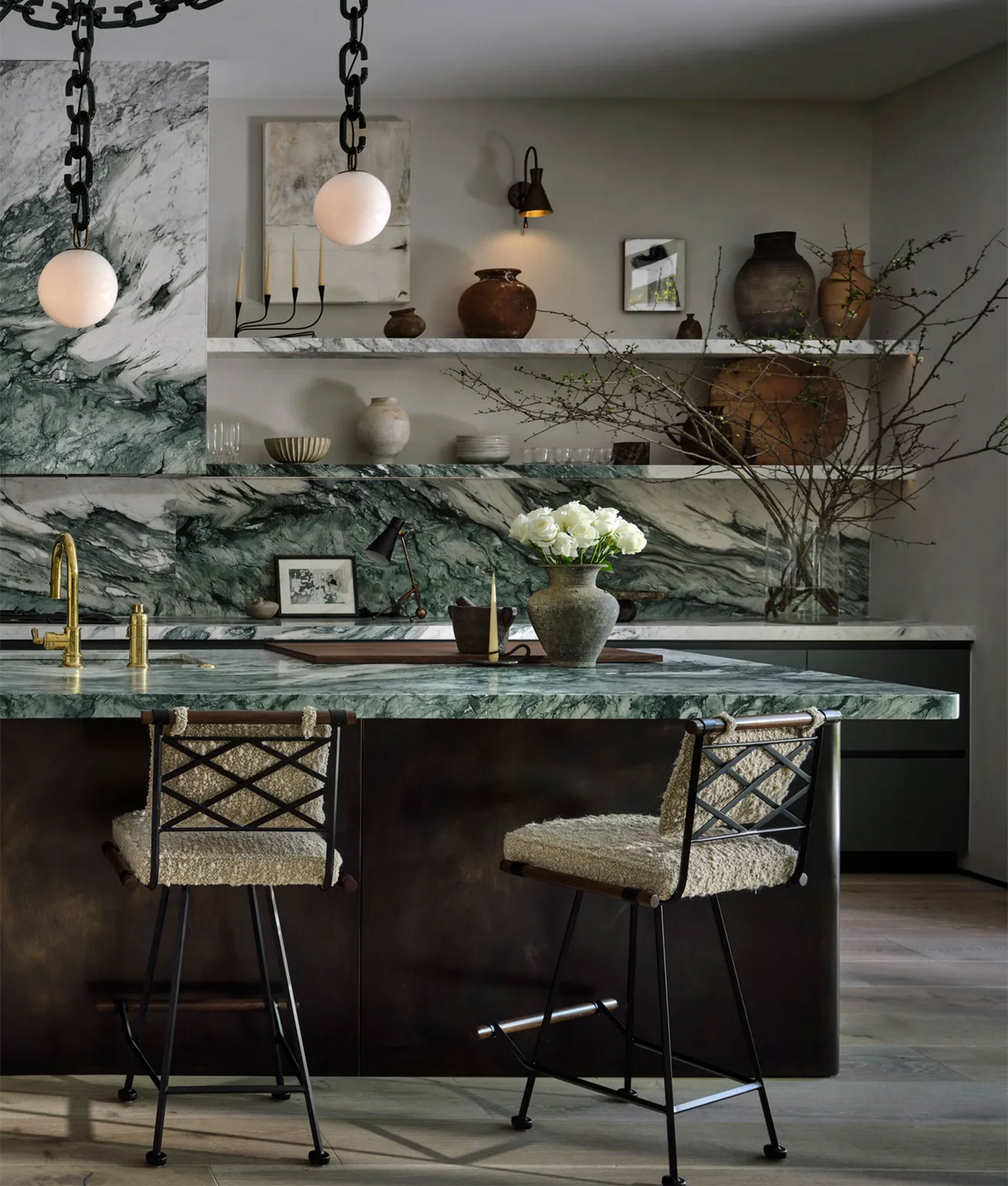
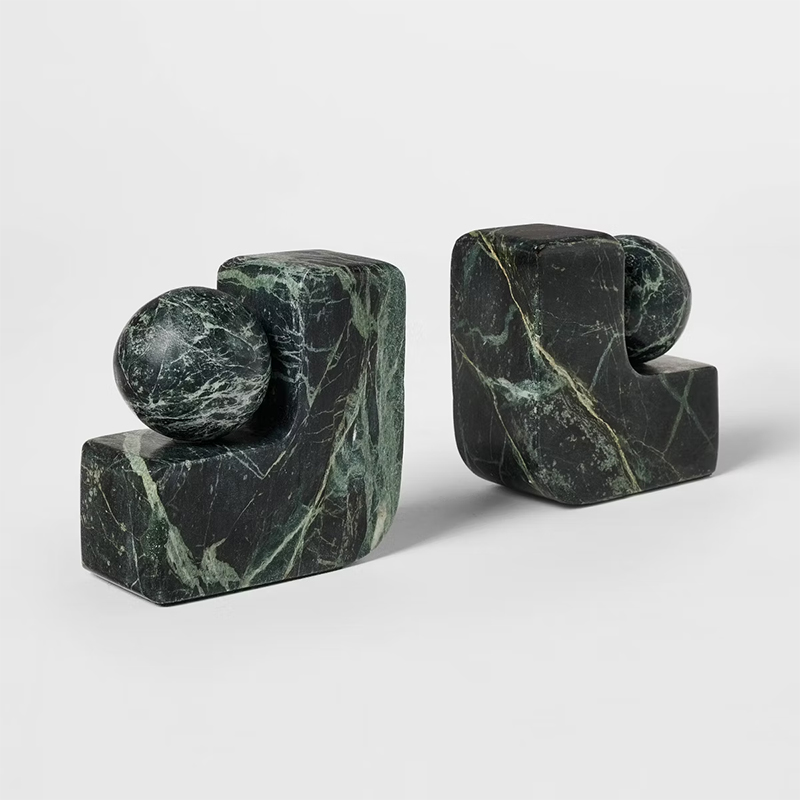
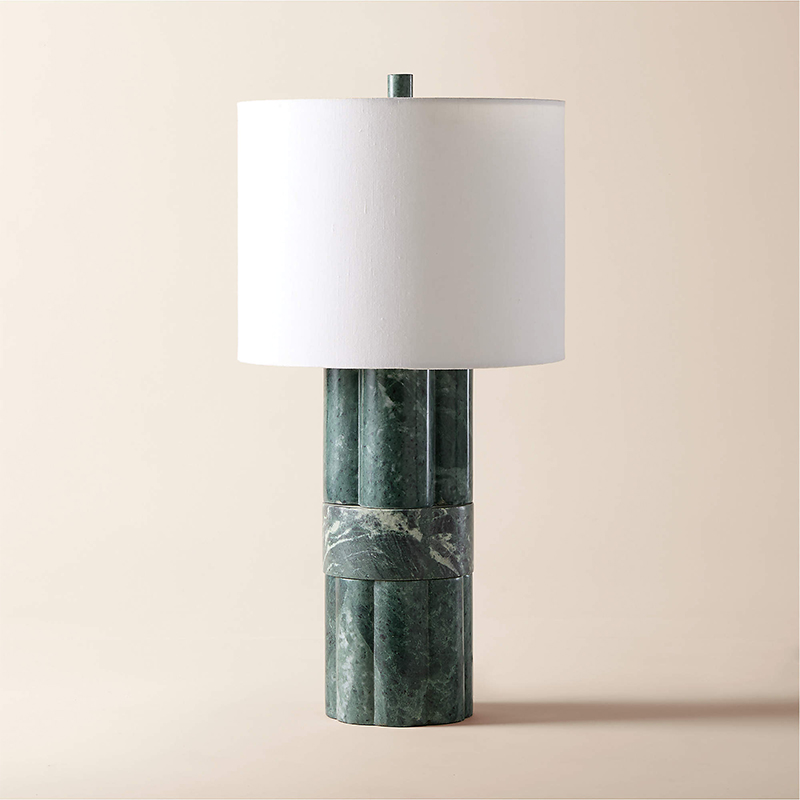
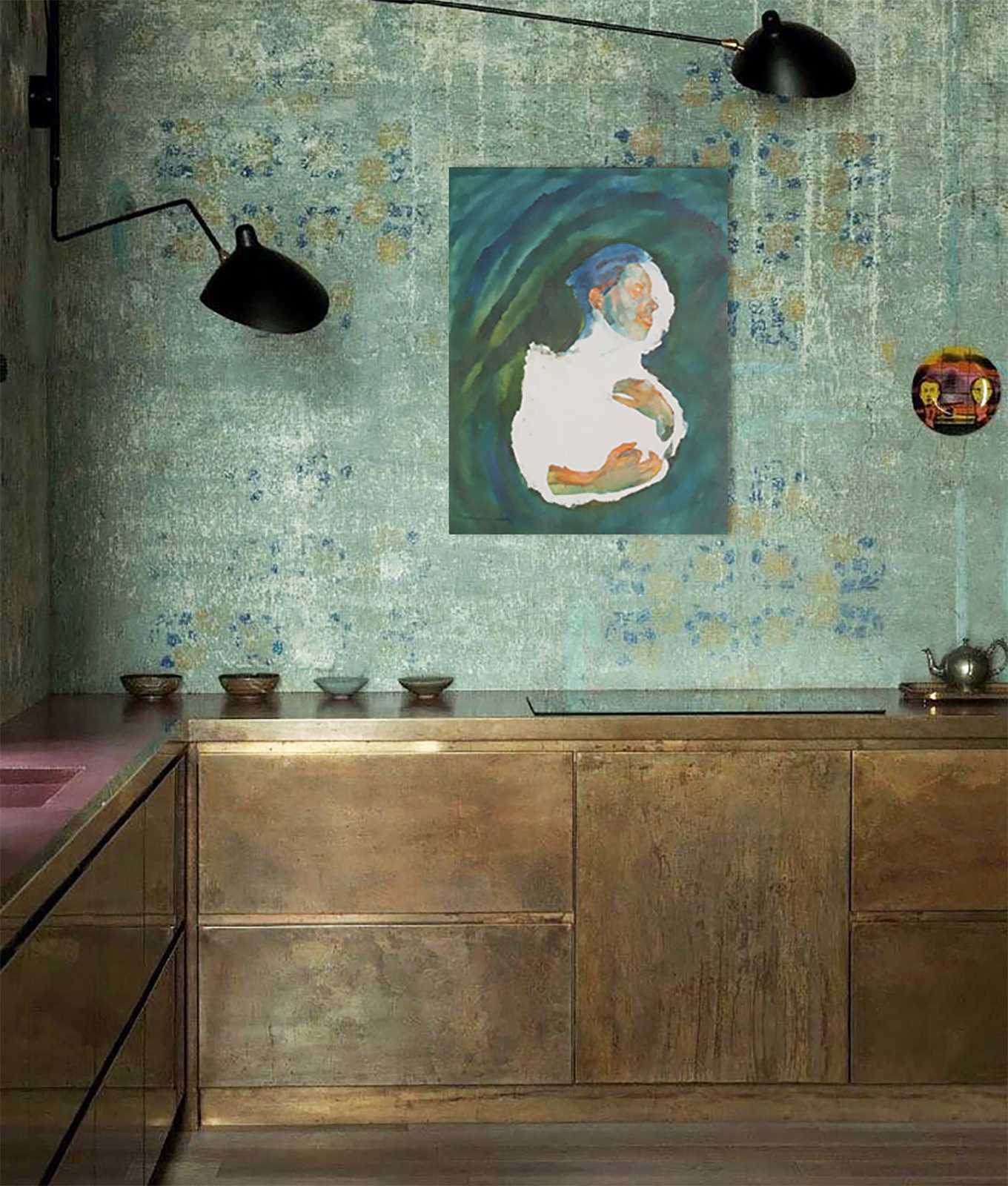
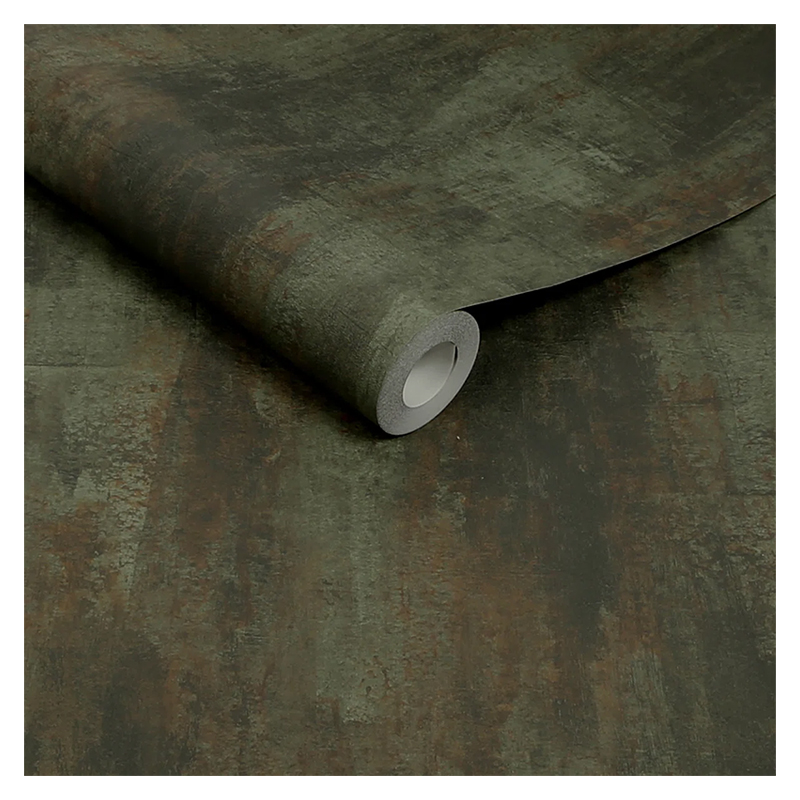
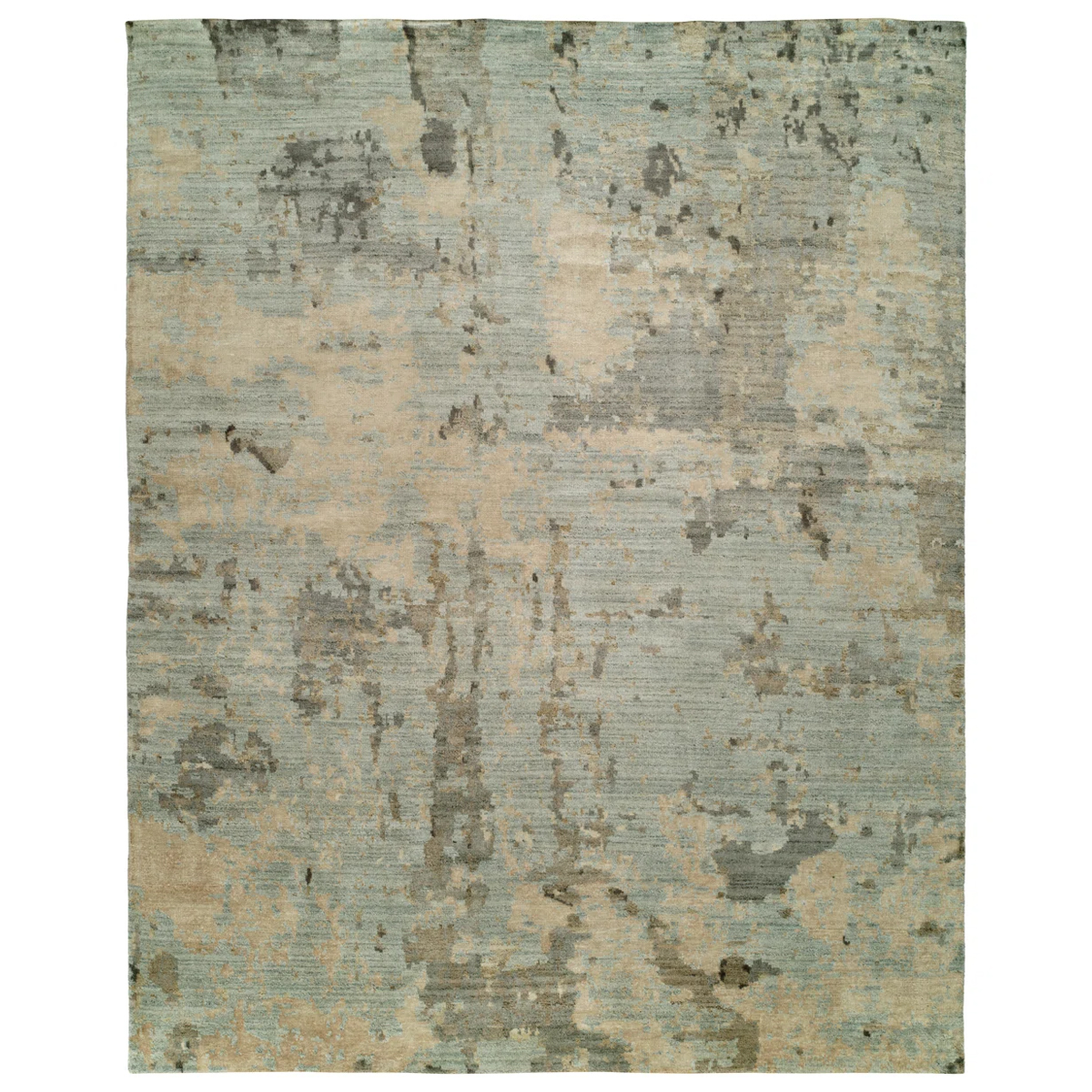
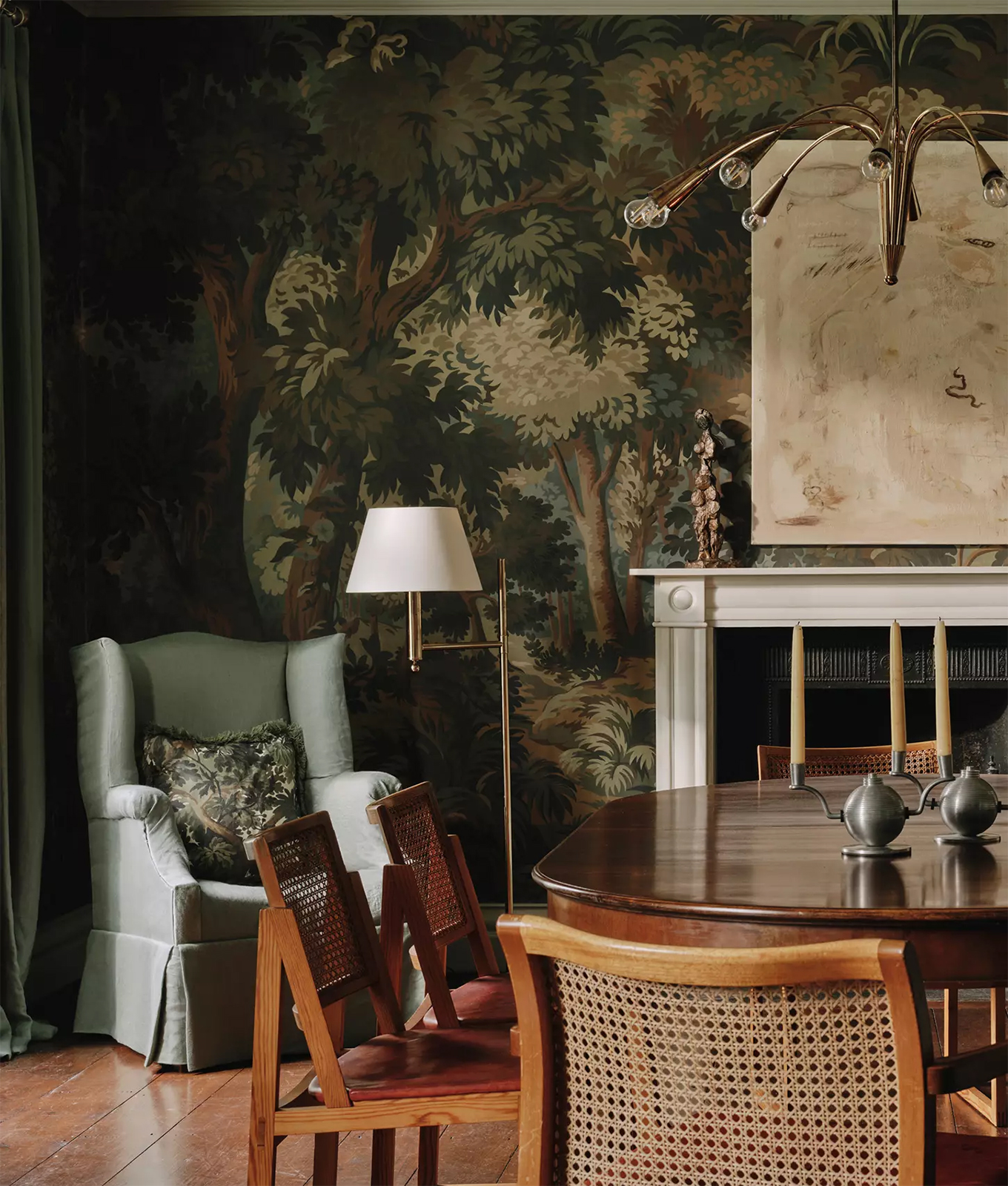
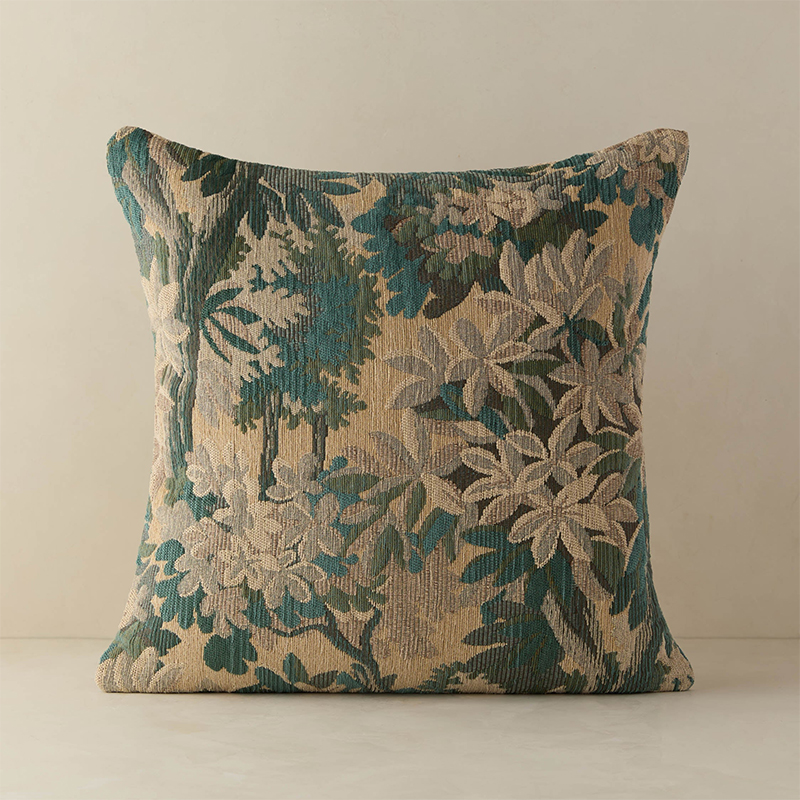
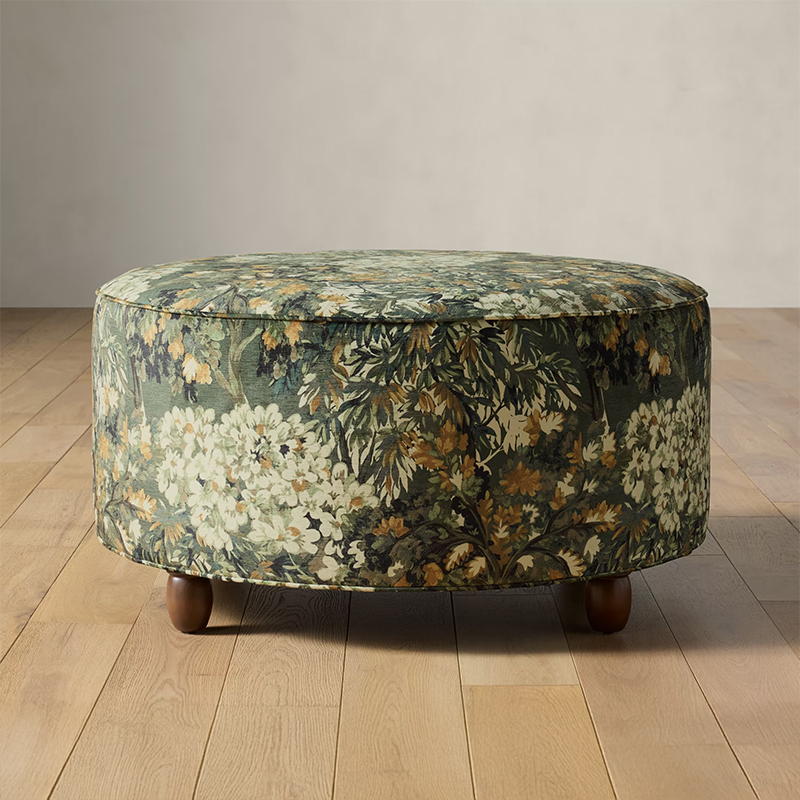
But the tide seems to be shifting. The same drama that gave emerald its allure now reads as theatrical. Too shiny, too polished, too loud for the quiet luxury movement. So rather than abandon green altogether, designers have simply recalibrated. The 2026 Colors of the Year all point toward a deeper, earthier spectrum—greens with smoke, shadow and patina built in. Behr crowned Hidden Gem (a moody blue-green) its top shade while Valspar chose Warm Eucalyptus—a soft gray-green pulled straight from an English manor. And beyond paint, verdigris patina finishes are everywhere—oxidized porcelain tile, patinated metal tables, even metal-mimicking wallpaper in weathered green. Not to mention that green marble—once niche—is having a full-scale renaissance, with designers book-matching massive slabs of Verde Alpi and Guatemala Green against tapestries.
The TL;DR? The new greens are mineral, mature and architectural. So below, I’m breaking down how the new palette is stepping in to replace emerald’s reign.