Can Eating Dates During Pregnancy Induce Labor? An OB-GYN Weighs In

Let's look into the actual research behind this, shall we?

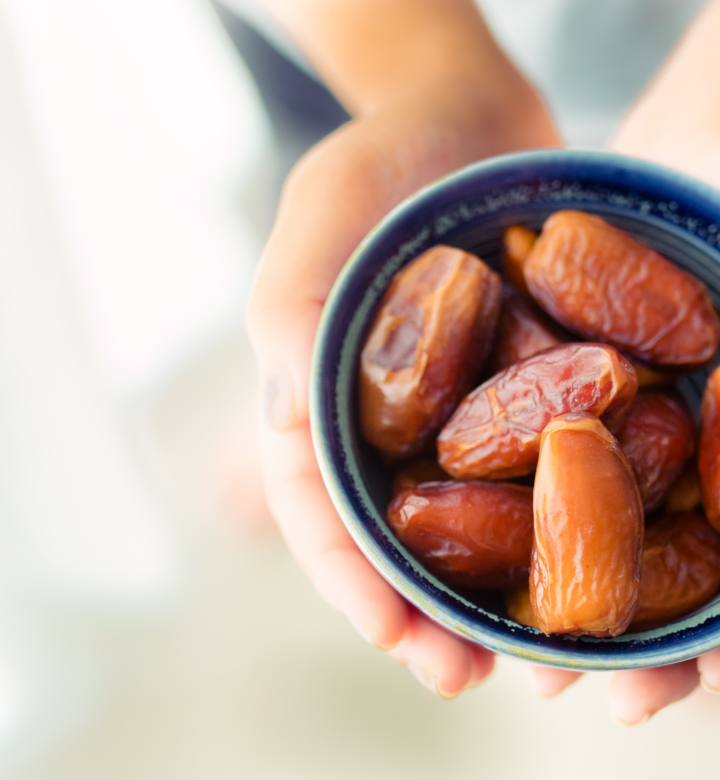
dates
krakenimages.com/shutterstock

Now that your due date is finally just around the corner, you’ve probably spent some time (OK, a lot of time) researching ways to make labor and delivery go just a little bit smoother (and everyone from your bestie to your grandma is happy to offer you their two cents). While some suggestions are completely unfounded (sorry—all the hot sauce in the world won’t actually induce labor), there are some things that just might work.

One of the most delicious-sounding methods? The theory that eating dates during the last few weeks of pregnancy can make for a smoother and more timely labor. Here’s the deal.

Meet the Expert


Dr. Jennifer Lincoln is a board-certified OB/GYN who is passionate about helping women understand their bodies and feel empowered to advocate for themselves. She practices as an OB Hospitalist in Portland, Oregon, and uses social media to educate and advocate. Her second book, The Birth Book: An OB-GYN’s Guide to Demystifying Labor and Delivery, is available now.

The Case For (and Against) Eating Dates in Late Pregnancy

If your due date has come and gone and you’re looking for a way to kickstart childbirth, we have some bad news. Research has found that munching on dates doesn’t actually induce labor, per se. But you still might want to pick up a bag at the grocery store, because dates could, in fact, have a positive impact on labor.

Women on TikTok are sharing their positive experiences eating dates during late pregnancy, and while we know that not every TikTok trend is worth following, Dr. Lincoln says there might be something to this one: “There's actually some research here to show that eating dates may be helpful (and I include the references in my book, The Birth Book)! A few small studies have looked at date consumption in the final weeks of pregnancy and found associations with a higher rate of spontaneous labor onset and decreased need for an induction of labor. The proposed mechanism involves compounds in dates that may have oxytocin-like effects on uterine receptors. The studies are small, and we don't know the optimal 'dose' of dates required, but overall it's a pretty low-risk intervention for most pregnant folks and may have some science behind it,” she explains.


Indeed, one such study, recently published in the Journal of Obstetrics and Gynaecology, followed 154 women, half of whom were assigned to eat seven dates a day (about 80 grams) starting in their 37th week of pregnancy. Although the date-eating group didn’t experience a faster onset of labor compared with the non-date eaters (womp, womp), they did receive less labor augmentation with Pitocin compared with the control group. While 50 percent of the control group required oxytocin to help their labor progress, only 37 percent of the date-eating group needed it.

Another trial in Iran found similar results. In the study, 105 women between their 37th and 38th week of pregnancy were assigned to the date-eating group (chowing down on 70 to 75 grams per day) and 105 pregnant women were told to avoid the fruit. Researchers found that only 20 percent of the date-eaters needed Pitocin for labor induction versus 45 percent in the control group. Not only that, but those eating dates had a riper cervix when they were admitted to the hospital (4 centimeters versus 3 centimeters).

That said, the expert advises that certain women proceed with caution, saying, “the one group I'd counsel to be more thoughtful is people diagnosed with diabetes in pregnancy, since dates are high in sugar and can affect blood glucose. For everyone else, if you enjoy them and want to eat them in the last few weeks of pregnancy, go for it!”

On That Note: What You Should Also Know About Natural Labor Induction Methods

Dr. Lincoln also emphasizes the importance of honesty and myth-busting, stating that most of her patients have already searched Google and TikTok for these ideas before coming to her with them, and while there might be something to the idea of eating dates in late pregnancy, many of these ideas should be taken with a (figurative) grain of salt.

“In my book, I explain that the evidence for most ‘natural’ induction methods (sex, walking, spicy foods, castor oil, etc.) ranges from weak to nonexistent, and some carry real risks. Castor oil, in particular, can cause severe diarrhea and isn't something I recommend to anyone," she says. "Nipple stimulation has the most biological plausibility since it releases oxytocin, but I'd only suggest it for folks who are full term and with low-risk pregnancies after they've discussed it with their doctor or midwife. The data shows it can work, but only if your cervix is dilated some.”

Additionally, Dr. Lincoln advises that women who are concerned about having a timely labor consider membrane sweeping: “This is an actual clinical intervention a provider can offer in the office at term, and the evidence supports it for reducing the likelihood of going past your due date and needing a formal induction. It's uncomfortable but low-risk, and it's the conversation I'd encourage anyone eager to get labor going to have with their OB or midwife.”


Resized 20230822 160749 1707534340613

Emma Singer

Freelance PureWow Editor

  • Has 5+ years of experience writing family, travel and wellness content for PureWow
  • Previously worked as a copy editor, proofreader and research assistant for two prominent authors
  • Studied Sociology, Political Science and Philosophy in the CUNY Baccalaureate independent study program.