
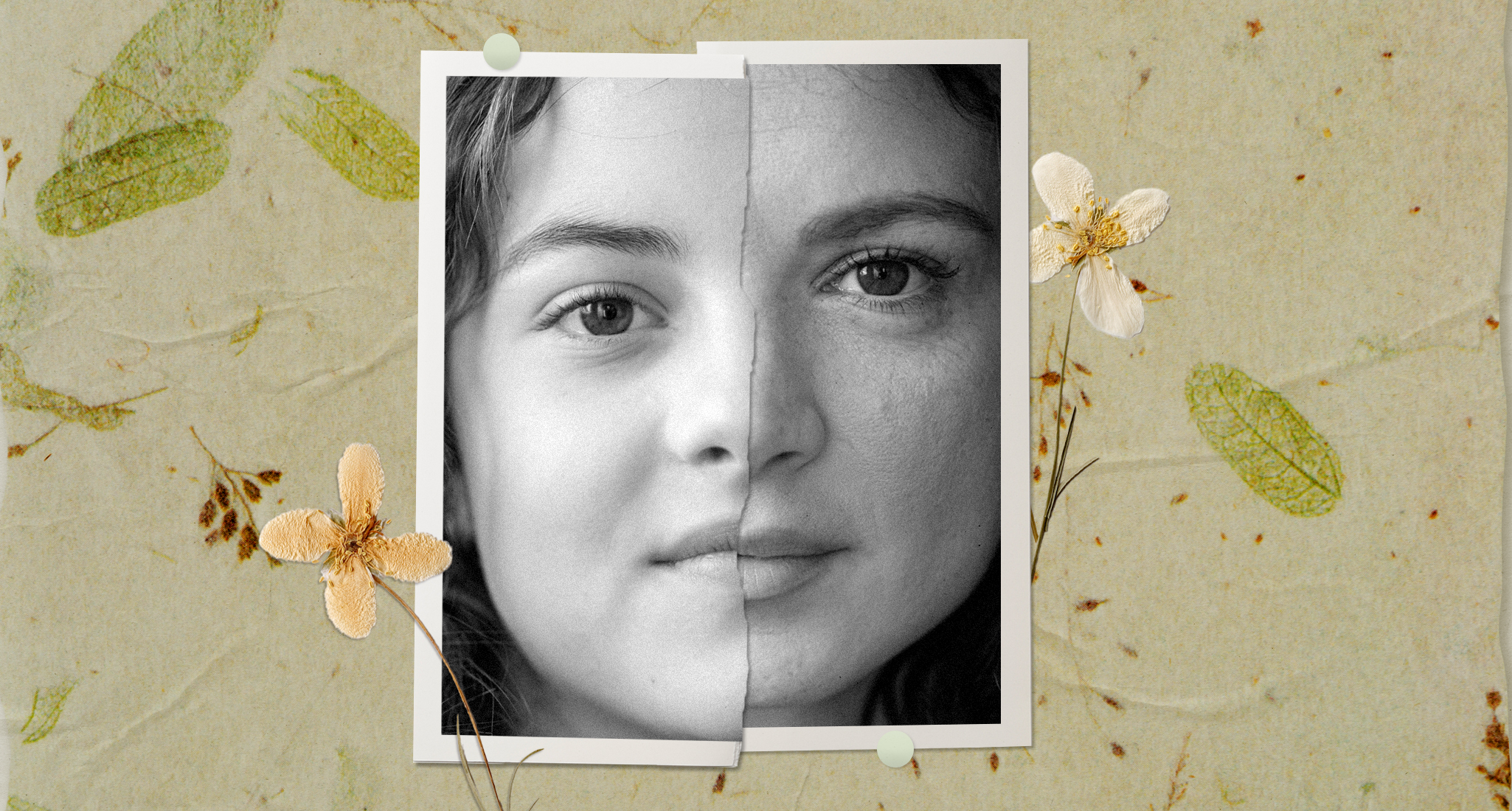
What Is Eldest Daughter Syndrome? Understand the Traits & Psychology Behind the Behavior That’s Inspiring Countless TikToks

Ever heard of birth order theory?

Eldest Daughter Syndrome universal copy
Dasha Burobina for PureWow
  • Eldest Daughter Syndrome has gone viral on TikTok for highlighting the outsized responsibility eldest female children can take on in the home.
  • The term is not an official clinical diagnosis in the DSM-5, though it does fall under the clinical term of "parentification."
  • Here, a psychologist shares 3 coping mechanisms

the tl;dr

Let me set the scene: The year is 2002, and I’m at Hersheypark with my family and three family friends. It’s the most humid day of the year, and the sweet smell of chocolate feels nausea-inducing against the steam of the roller coasters. I, 4 years old at the time, am sitting next to my mother on the flume. The water is splashing around the sides of the boat and deafening screeches are coming from the rowdy children beside us. I notice Mom’s knuckles, white from tightly gripping the bar of the ride, and then scanned her face to find a forced smile. “Mom,” I ask, peering up at her with as much seriousness as a 4-year-old could muster. “Are you and Dad gonna get a divorce?”

As you can imagine, her face froze in shock. How did her 4-year-old know what divorce was? And more importantly, how did I know to ask the question in the right context? The short answer is that my father—a commodities broker on Wall Street—incited more stomach churns than the SooperDooperLooper that day. He’d been a snappy bundle of nerves; eagerly checking his pager for intel on a trade happening in New York. My mother, meanwhile, was in hell. Between the heat, dad’s temper and juggling two kids under 4—all while trying to socialize with the group—I now wish I could’ve ditched the ride and grabbed martinis with her instead.

Nevertheless, I recall the tension of the day, which felt thicker than the 90-degree air. There was a silent storm brewing, despite my mother’s best attempts to mask it. And while my parents are still together 21 years later (dad chilled out after he left the trading floor), I now realize this was my first clear memory of “reading the room.” As with most eldest daughters, I often felt like my family’s emotional barometer—always attuned to subtle shifts in the mood and atmosphere. It’s a skill that’s only sharpened over time, making it easy to pick up the emotional lint of others. Yet, while being hyper-aware has had its upsides, it’s also laid the foundation for what I now recognize as Eldest Daughter Syndrome (EDS).

The “Birth Order Dating Theory” Just Explained Why I Should Never Date an Older Sibling


Meet The Expert

Dr. Avigail Lev, Psy.D. is a licensed clinical psychologist, author, and founder of the Bay Area CBT Center. She specializes in Acceptance and Commitment Therapy (ACT) and Schema Therapy to help individuals and couples break unhelpful relational patterns. A former clinical supervisor at Palo Alto University, she’s authored three books on interpersonal dynamics and has been featured in The New York Times and NBC. Her work focuses on emotional overfunctioning, perfectionism, and attachment—making her uniquely equipped to speak on eldest daughter syndrome.

What Is Eldest Daughter Syndrome?

Eldest Daughter Syndrome, which is clinically referred to as parentification, describes the situation in which a child (usually the eldest female) takes on the role of a support adult within the family structure. This can include psychological burden, domestic work and caregiving responsibilities. While it doesn't affect all eldest daughters, they are usually the ones affected by parentification, though it is possible for other siblings to experience it as well.

According to clinical psychologist Dr. Avigail Lev, positing parentification as Eldest Daughter Syndrome encapsulates the “unique challenges and responsibilities for the oldest female child in a family, often making them de facto role models and caretakers.”

She continues, “Eldest daughters often feel an overwhelming sense of responsibility to ensure that everyone in the family is taken care of—and these psychological challenges can extend into their relationships [in adulthood].” While other kids were learning to play the recorder, we were learning to decode passive aggression at the dinner table.

The specific term itself isn’t a clinical diagnosis in the Diagnostic and Statistical Manual of Mental Disorders (though parentification is a classified term; just not a standalone diagnosis). It’s gone viral on TikTok thanks to Kati Morton, a licensed marriage and family therapist, who posted the video above. She adds: “In short, those of us with EDS are responsible for more domestic labor than our siblings.” Why? Because, according to Birth Order Theory, the eldest is shoved into the “third parent” role before they lose their baby teeth. Eldest daughters like me were expected to be responsible, intuitive and emotionally grounded on command. (But more on birth order below.)

7 Oldest Daughter Syndrome Traits

EDS sufferers often exhibit hyper-responsibility as adults, deal with burnout and constant people pleasing and struggle setting boundaries with family.

“Eldest daughters frequently experience profound psychological impacts, including anxiety and depression. The constant pressure to meet high expectations and act as a caretaker can take a significant toll on their mental health,” Dr. Lev explains. “Perfectionism and people-pleasing behaviors are common, further exacerbating these mental health issues. Eldest daughters often feel an overwhelming sense of responsibility to ensure that everyone in the family is taken care of, which can lead to chronic stress and burnout.”

Sound familiar? If so, here are a few signs you might have Eldest Daughter Syndrome:

  • Constant feelings of resentment: You often feel resentful for over-giving…then experience guilt for feeling resentful
  • Feeling responsible for everyone’s emotions: You’re a barometer for everyone’s mood (except your own) and are always the peacemaker
  • Craving control: This gives you a sense of security and perfection feels like peace
  • Default mode is caretaker: Whether in romantic or platonic relationships, you’re looking out for everyone’s needs
  • Deriving your value from performance: You equate your worth with how well you hold everything together
  • Burnout: You feel burned out but still believe you’re not doing enough
  • Can’t say no: You struggle to say no, even when your calendar (and nervous system) are at capacity

The Clinical Psychology Behind EDS: Understanding “Parentification”

Alfred Adler—the original theorist behind Birth Order Theory—believed that our position in the sibling lineup (oldest, middle, youngest) plays a defining role in shaping our identity. Firstborns, he speculated, were likely to have a strong sense of responsibility. For eldest daughters, being born first means being cast first—into roles that often blur the lines between sibling, leader, and second-in-command to the parents.

A heightened sense of responsibility within their family unit is a common trait among eldest daughters,” explains Dr. Lev. “This responsibility isn’t merely a parental expectation but also a societal one, pushing them into roles that foster leadership traits and an achievement-oriented mindset.”

And these expectations don’t wait until adolescence. “Eldest daughters frequently find themselves at the helm of family activities, taking charge of situations and managing household tasks, a direct result of both social pressure and familial expectations.”

From babysitting siblings to smoothing over emotional blowups, eldest daughters often become de facto caregivers long before they even understand what that means. “In the intricate web of family dynamics, eldest daughters often find themselves taking on significant caregiving roles as a family member. This parentification means they frequently act as surrogate parents, providing not only physical care but also emotional support for their younger siblings.

The result? Sibling relationships marked by complexity and imbalance. “Such roles can profoundly impact sibling dynamics, leading to a complex mix of respect and resentment,” Dr. Lev notes. “Younger siblings might view their eldest sister as a second parent rather than a peer, which can strain relationships and create feelings of neglect or inadequacy.” And that tension isn’t just felt at home—it’s reflected in how eldest daughters are perceived more broadly. “Eldest daughters are often seen as bossy or domineering, not because of their inherent traits but due to the responsibilities they are given.”

When filtered through the lens of gender, those labels become even more pronounced. “Societal norms and cultural traditions further reinforce these roles, particularly in families where gender roles are pronounced.”

In other words, layered on top of family duty comes society’s script for girls. Eldest daughters often inherit a double bind: Not only expected to lead at home, but also to model the perfect woman outside of it. It’s not just about stepping up as a third parent—it’s about embodying the ideal caretaker while doing it. Praised for sacrificing her weekend to babysit. Told she’s “so mature for her age”—when really, she’s just over-functioning in a house where emotional labor is handed out like chores.

How EDS Affects Adult Relationships

When you consider some of the buzzwords tied to EDS—like anxiety, control or guilt—it’s easy to see why dating can feel like walking a tightrope. Take me, the eldest of two sisters, for instance. My emotional antenna was an asset in childhood—it allowed me to tap into my family’s emotions, smooth over rifts and effectively make everyone feel OK. The catch-22, however, is that I never learned how to sit with uncomfortable emotions. I’d just try to "fix" them.

Eldest daughters often (though not always) find it difficult to connect with peers or maintain same-age relationships, partly because they are used to being in a caretaker role rather than an equal partner,” Dr. Lev explains. “[They may have] difficulty sustaining relationships that are reciprocal, they [often] give more than they get in return. Perfectionism and people-pleasing behaviors are common [because] eldest daughters often feel an overwhelming sense of responsibility to ensure that everyone in the family is taken care of.” Which is why, in adulthood, dating can feel more like a win/fail scenario. Relationships that didn’t work out were inherently my fault—and a first date that didn't lead to a second was because I did something wrong. There was no reality where I couldn’t meet someone’s emotional needs—I simply had to try harder.

But then, I started therapy. It’s where I learned that I inherently crave control—and assume too much responsibility in relationships—which leaves me with a never-ending sense of guilt (all staples of EDS). It was also the first time someone told me it’s fine to not be fine: You’re exactly where you need to be—even if it feels uncomfortable. For years, I operated under the assumption that I’d be OK, so long as everyone around me was OK. But now, I understand that the only emotions that need managing are my own.

So, for any of my fellow older sisters (who can’t shell out $350 per session), here are three things my therapist—and Dr. Lev—taught me about how to stop overfunctioning when you’re first in line.

A Therapist's Tips on Coping with Eldest Daughter Syndrome

1. Stop Treating Relationships Like a Test

Befitting to my perfectionist stereotype, I used to view every first encounter as a test I had to ace. If things didn’t pan out, I’d blame myself. Yet, as Dr. Lev explains, eldest daughters are conditioned from an early age to be high achievers—so of course we try to “win” at relationships too. The problem? “Learning to allow oneself to make mistakes and prioritize personal needs can be a transformative step,” she says.  

Dating is the perfect place to start. Here’s how my therapist reframed it for me: It’s not about getting someone to like you—it’s about figuring out if you like them. That mindset shift not only removes the pressure of proving you're enough, it actually lets you enjoy the process. When I stopped treating dating like a performance review, I felt a 50-pound weight lift off my chest. I didn’t have to exhaust myself by trying to win someone over with a flawless performance. (I could just… be myself?) Now I just sit back, relax and let the connection evolve in the way it’s supposed to. Very control freak meets Gandhi.

2. Stop Trying to Control the Outcome

Speaking of control freaks: It’s time to let go of managing other people’s emotions. While that skill may have been useful in childhood—soothing tantrums, smoothing tension—it becomes anxiety-inducing in adulthood. Trying to preempt every thought, reaction or potential red flag in someone else is exhausting. And, per Dr. Lev, it’s a symptom of emotional overfunctioning—something eldest daughters are practically trained to do. They will often see themselves as the cause of others' behaviors or prone to taking responsibility for others' thoughts and feelings. That's why it's important to set limits, even if it makes you feel guilty.

"We have to help eldest daughters prioritize, take care of and assert themselves even while having guilt because guilt is part of their conditioning," she adds. "They will always feel guilt when making themselves a priority and guilt is a cue that they are taking care of themselves. It takes a long time for that guilt to shift."

Meaning they tend to see themselves as the cause of other people‘s behaviors or at fault for things meaning they take over responsibility for other people‘s thoughts feelings and behaviors.

Plus, as my therapist once told me: True connection isn’t about control—it’s about vulnerability. That stuck with me. It made me see how external control means a lack of internal control (and vice versa). When I accepted that everyone is flawed, and that a frizzy hair day won’t make or break a second date, I opened myself up to genuine connections. In fact, I’ve noticed that people actually like seeing my less-than-perfect side. (As an ex-beau once said, “It shows me you’re human.”)

3. Stop Accommodating Everyone Else

Disclaimer: I probably wouldn’t give this advice to a younger sibling. This is because the youngest tends to be, shall we say, self-oriented. And while they can’t help but prioritize their own interests, elder siblings face the opposite issue: People-pleasing is in our DNA. In relationships, I’d habitually suppress my own desires to keep my partner happy (like watching Star Wars instead of Uptown Girls). That kind of self-erasure leads to burnout—and resentment.

“Eldest daughters should recognize that they deserve help and support just as much as anyone else,” Dr. Lev reminds us. That includes advocating for your own needs, no matter how small they feel. Take it from my therapist’s mantra: Say what you want. Even if it’s as inconsequential as your dinner order. You’re not being difficult—you’re being human. And that’s the only way to build a relationship that’s rooted in mutual respect, not martyrdom.

The Bottom Line

Eldest Daughter Syndrome isn’t a diagnosis—it’s a dynamic. One shaped by birth order, yes, but also by invisible contracts we sign before we even know how to write our names. It shows up in how we micromanage group chats, keep an emotional scorecard for our partners, and take pride in being “the responsible one”—even when it’s slowly draining us.

For me, the realization didn’t come in a lightning bolt. It came in a therapist’s office, during a session where I couldn’t explain why I felt so tired all the time. Tired of fixing, tired of overfunctioning, tired of managing other people’s moods like unpaid PR. And slowly, I learned that the tools I once used to keep my family running weren’t built for intimacy—they were built for survival.

The good news? You’re allowed to outgrow the tools you once used to survive. You don’t need to over-perform in every situation. It’s OK to take up space. All it takes is a perspective shift to realize that who you are—not what you do for everyone else—is enough.

Frequently Asked Questions

Is Eldest Daughter Syndrome a formal mental health diagnosis?

EDS is not formally recognized in the Diagnostic and Statistical Manual of Mental Disorders. However, it can fall under a recognized term of “parentification,” in which a child assumes a role of an adult (psychological burdens, domestic labor, caregiving) within their family. EDS is a conversation focused on the supposed plight of the eldest female child in a family.

What are the symptoms of Eldest Daughter Syndrome in adults?

EDS can manifest in traits like craving control, feeling responsible for other people’s emotions, defaulting to caretaker mode, having poor boundaries and nursing constant feelings of resentment.

How does Birth Order Theory relate to Eldest Daughter Syndrome?

According to the creator of the theory, Alfred Adler, firstborn children usually have a strong internal sense of responsibility, and because they begin with no siblings can often be labeled “tiny adults.” They are known for being confident and mature for their age, with a desire to please. Firstborns are typed as reliable achievers who exert control. EDS is an unofficial offshoot looking at the eldest female child in a household, who often embodies these traits and is handed over a disproportionate amount of responsibility for others from a young age. And because of her birth order position, she embraces it.


profile pic WP

Sydney Meister

Design & Cultures Editor

  • Writes across all design and culture verticals, including interiors, art, travel, relationships, sex and family.
  • More than five years of experience in editorial, including podcast production and on-camera coverage
  • Holds a dual degree in communications and media law and policy from Indiana University, Bloomington

mw headshot

Marissa Wu

Editor, SEO and Audience Development

  • Writes across all verticals, including beauty, fashion, wellness, travel and entertainment, with a focus on SEO and evergreen content
  • Has previously worked at Popular Photography and Southern Living, with words in Martha Stewart and Forbes Vetted
  • Has a B.S. in journalism from Boston University